Learning while doing is the experiential industry’s default training model. Is there a better way to get up to speed?
Hop on the bus to find out.

The Real Ones joined an educational excursion designed to break down barriers for professional events workers — veterans and noobs alike. This report will gauge how the paid experience delivered on three key areas:
Industry Context - what does the experiential marketing vendor machine look like when you pull back the curtain? Understanding the tools and talents of a shop can open up possibilities earlier in the strategy and design stages.
Communications Best Practices - How can producers best work with vendors? Adding a human element to a transactional relationship can do wonders for mutual understanding, nuance, and results.
Community - Can brand reps, vendors, students, and producers actually connect off the clock? Professional and personal exchange can be beneficial at any stage along the food chain.
In experiential marketing it’s an open secret that the best event producers are freelancers. In our late-stage capitalism era, as Americans are exposed to 5,000–10,000 brand messages daily, marketers are increasingly crafting strategies around live experiences — making skilled producers more valuable than ever.
These functional creatives – tasked with bringing people together – are often self-taught solopreneurs. They see what others don’t and thrive on making something from nothing. When freelance rates outpace salaried roles, independence becomes the obvious choice. Producers appreciate their freedom and generally get the most out of owning their schedule.
Must be nice. But what is the educational path to commanding that kind of clout? Short answer – there isn’t much of one. Juliette Paige set out to do something about that, starting with, you guessed it, an experience: The Experiential Marketing Field Trip. And she invited me to tag along.
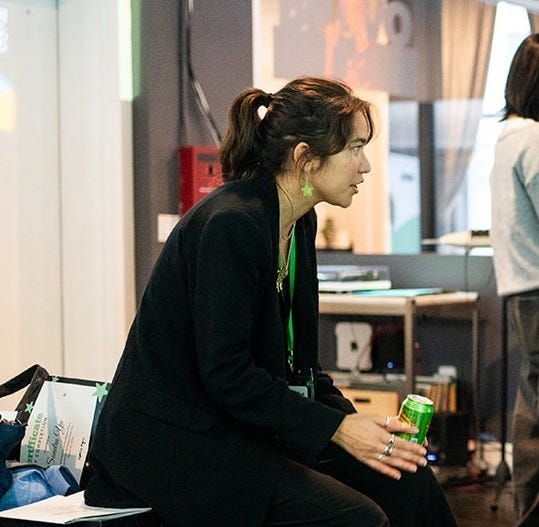
Two years into her career transformation, Paige, a former Apple mechanical engineer-turned-freelance-experiential producer, recognized that the community of producers that she’s become a part of are in many ways better collaborators than the corporate teams of her past.
“It’s my firm belief that creatives shouldn’t create alone,” Paige said, as we reflected on the weekly experiential freelancer co-working session that she hosts in a remarkably empty Lower Manhattan cafe.
“I love finding ways to support freelancers through community, collaboration, and resources. And selfishly, I love getting out of the house and meeting other freelancers.”
It was at one of these parallel work sessions that Paige brought up her idea for an educational platform to help people break into an industry that doesn’t show up as a college major. Apart from a few programs at schools like Parsons and FIT, there are precious few resources available for studying the complicated and diffused experiential marketing ecosystem that happens to be more in demand than ever.
“Agreed!”, the group cried, and ideas flew around for 45 minutes. Creatives creating together.
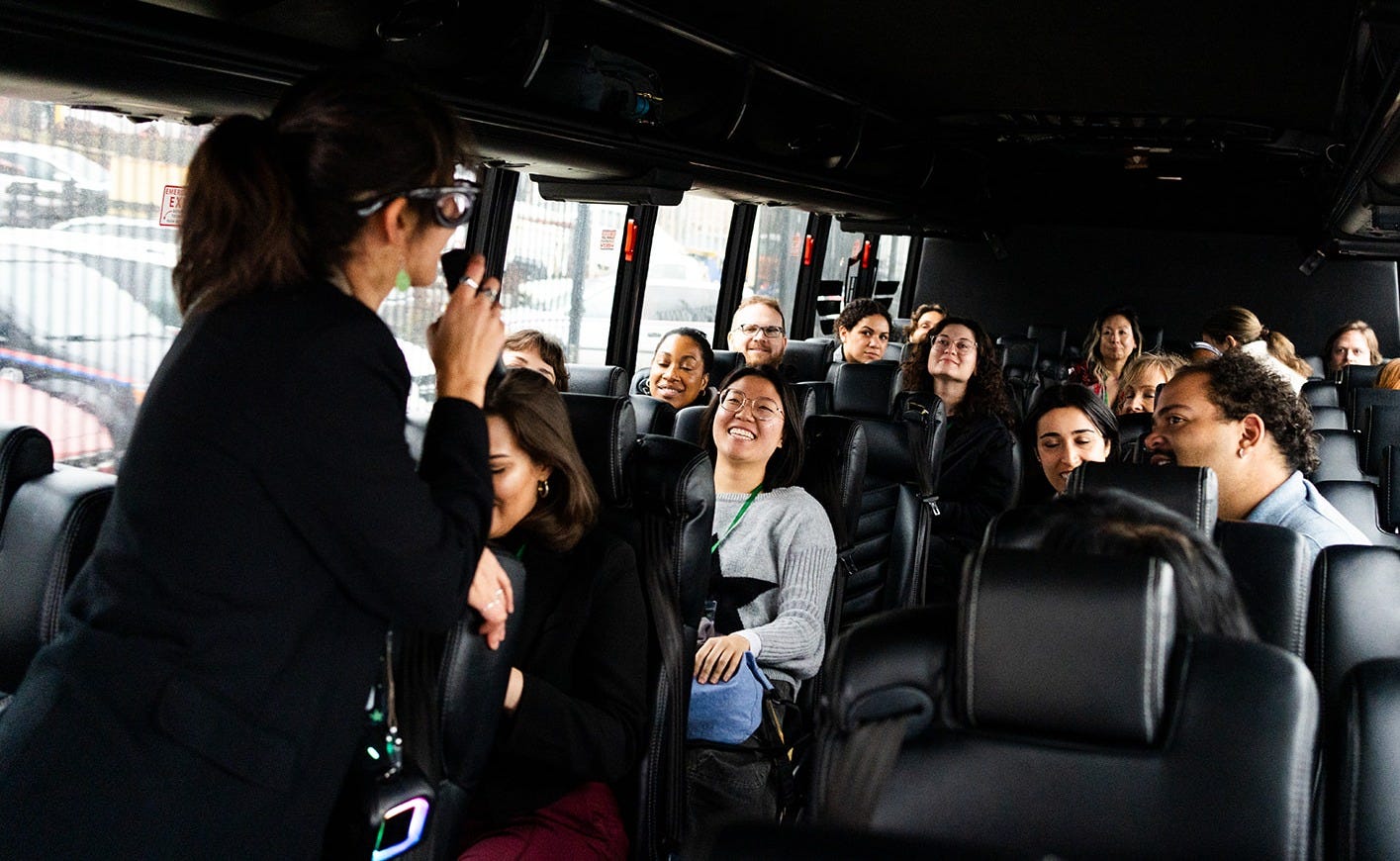
Paige, who operates as Rookie Move, took her educational concept, with a few of her benevolent competitor’s ideas, and created The Experiential Marketing Field Trip. This inaugural one-day, 4-stop, DH2 Transportation bus-powered tour took 22 attendees (including a motion graphics designer, creative directors, event producers, production sales, and a couple students) on a journey of industry demystification.
The experiential marketing vendor landscape is a tangle of independent businesses providing everything that a live event would need, from unique services like laser sandwiches, to ubiquitous necessities like flowers or chair rentals. The more complicated the project, the more opportunities there are for a freelance event producer to run into friction when going between the brand client lead and a new vendor. Like most experiential people, Juliette happened to fall into the business. Once she made the switch, Paige immediately became aware of her deficiency in things like industry lingo, and process timelines. Unlocking unintentional yet systemic gatekeeping is one of her main drivers when designing the field trip.
And like that of famous road warrior Bruce Springsteen, the tour begins in Jersey.
Stop #1 2XL Imaging, Springfield, NJ: printing and production of wide-format custom graphics. Clients: Armani, MLB, New York Toy Fair, Skechers, NYFW
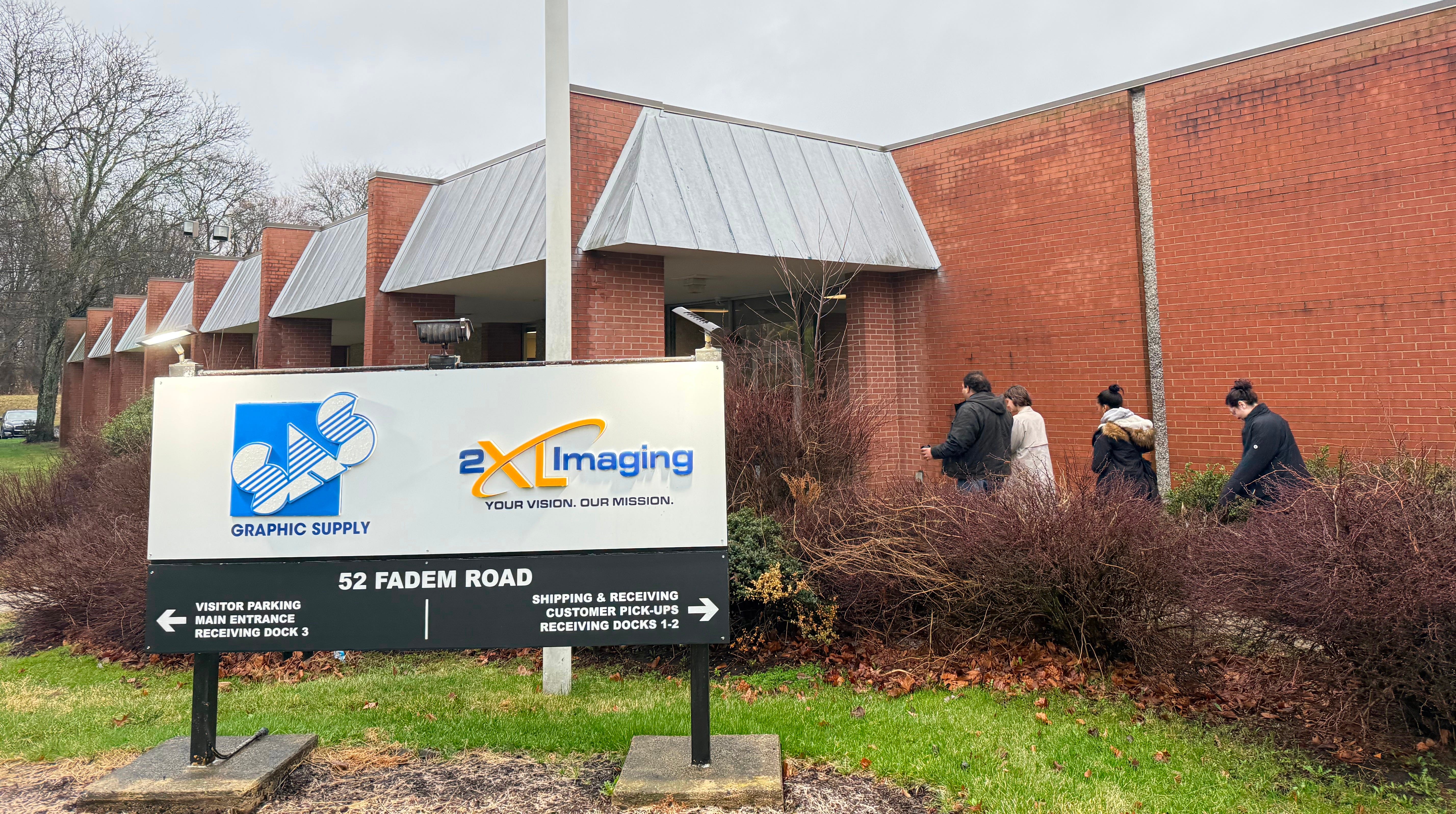
This marketing asset production go-to is a giant of the tri-state area. Brands rely on 2XL for signage, labels, vehicle and building wraps. They can provide concept, design, production, and installation. 2XL Imaging sits inside an endless lowslung building amongst endless fast food chains a good 50 minutes outside of the city.
Kevin Sharfstein, Vice President of 2XL, and BizDev killer Jennifer Perez walked the group through a presentation of how best to work with a wide format printer, seated around the second longest board room table in Northern New Jersey. The bagels were good.
The arc of 2XL is one of constant evolution. Client vision, emerging technology, and happy accidents all contribute to an expanding list of capabilities.
“If you can think it, most likely we can make it,” said Sharfstein. The only immovable objects, like so many things in life, are time and money. He reiterated that timing is the most important and a project can never start too early. I asked him about how busy the floor was with the World Cup coming to town this summer.
“Almost nothing has come in for the World Cup yet.” The global soccer event has been on the industry’s radar for years. Chilled budgets and indecision based on the country’s chaotic political and economic climate – plus good old fashioned procrastination – have created what will surely be a production bottleneck for all printers come May.
Hot Tip: Reach out to printers early and be sure to consider competing calendar moments when constructing timelines. There are only so many printers to absorb parallel projects.
Stop #2 11th St Workshop, Jersey City, NJ: custom fabrication, retail interiors, and production design. Clients: Capital One, Grammy Awards, Louis Vuitton, Macallan
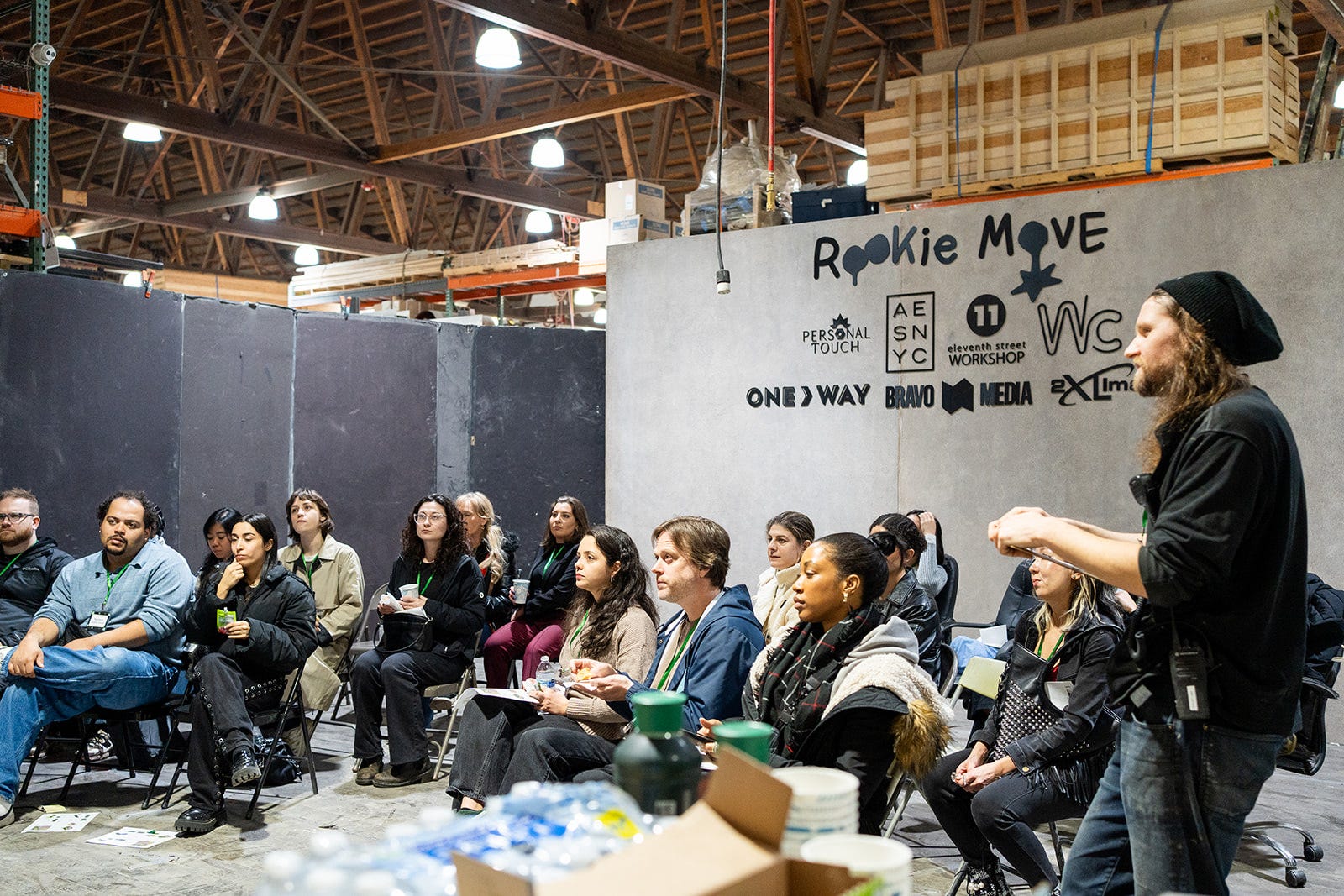
Jammed into an overstimulating, crowded, industrial section of Jersey City, this massive warehouse (it looks more like an old school field house) holds a stable of woodworkers, welders, designers, and other tradesmen pumping out hand crafted commercial sets, tradeshow booths, festival activation assets, and pretty much anything else physical that a creative director can ideate.
EVP Anthony Asaro took one of our groups around the shop, showing off mega painting machines, welding projects, and a Nissan Cube-sized watering can that was taking shape before our very eyes. Part of the company’s founding family, Asaro clearly takes pride in his craft and I noticed a remarkably engaged presence as he explained the importance of communicating one’s vision, or bringing daring ideas to the front earlier in the creative process. Asaro was a teacher before joining 11th Street and it showed. It wasn’t hard to imagine his years honing classroom management skills coming in handy when dealing with the hyperactive neuroses of a producer on deadline. While the physical environment of a fabrication shop can be daunting and the process of their work can be opaque, it’s useful to remember that these are people – skilled, creative, and experienced. Taking the time to connect on a human level can unlock exceptional results.
Hot Tip: As experiential marketers are fond of saying, feeling is better than seeing. Take the time to visit your vendor’s physical space. Witnessing these makers’ in their natural habitat will lead to concepts and executions that might not otherwise be obvious.
Stop #3 AES NYC, Midtown, Manhattan: event venue management & sourcing, plus Personal Touch Catering. Clients: ESPN, Stone Island, NASCAR, Vimeo, Milk Makeup


New York City is home to more event venues than any other place on earth. I have no data to support this claim, but, especially in this post-Covid, online-everything world of empty storefronts, hollowed-out offices, and stubbornly high rents, I’d be surprised if I were wrong. AES is one of the enterprising companies that has made lemonade out of vacant spaces, offering their event venue marketplace to owners of heritage and white box spaces in convenient locations around the city.
We were treated to twin hospitality from AES and one of their preferred caterers, for lunch in the refined confines of Annex417, a 20,000 SF event space on 5th Ave. Chris Felts, COO, explained how AES not only provides blank canvas and versatile spaces but also has the production team and preferred vendor lists to pull off most any event type. AES finds the events industry spaces and it finds money for real estate holders with open inventory. Fashion Week runway shows, cheese festivals, corporate retreats, and pop-ups cycle through their small but mighty operation at their expansive 5+ leased spaces. AES will also scout unique locations on occasion.
Hot Tip: Venue companies like AES (see also Blace, The Kagency) not only have a variety of spaces and supporting staff options but since they’re real estate experts, they can also find unique or one-off venues to fit a client’s exact specifications.
Stop #4 Bravo Media, 5th Ave, Manhattan: digital displays, interactive design, and immersive brand activations. Clients: KPMG, NFL, Google, T-Mobile


Paige saved the shiniest for the last. Bravo’s home is light years away from the manufacturing plants where we began our journey both in location and aesthetic. Located in NOMAD, Manhattan, their office feels like the loft apartment of mad scientist tinkerers. Designer David Tile plays the part too. Along with producer Alex Zbornak, they role played a projection mapping creative session with the group to instantly transform the concrete box of a space into a tropical beach.
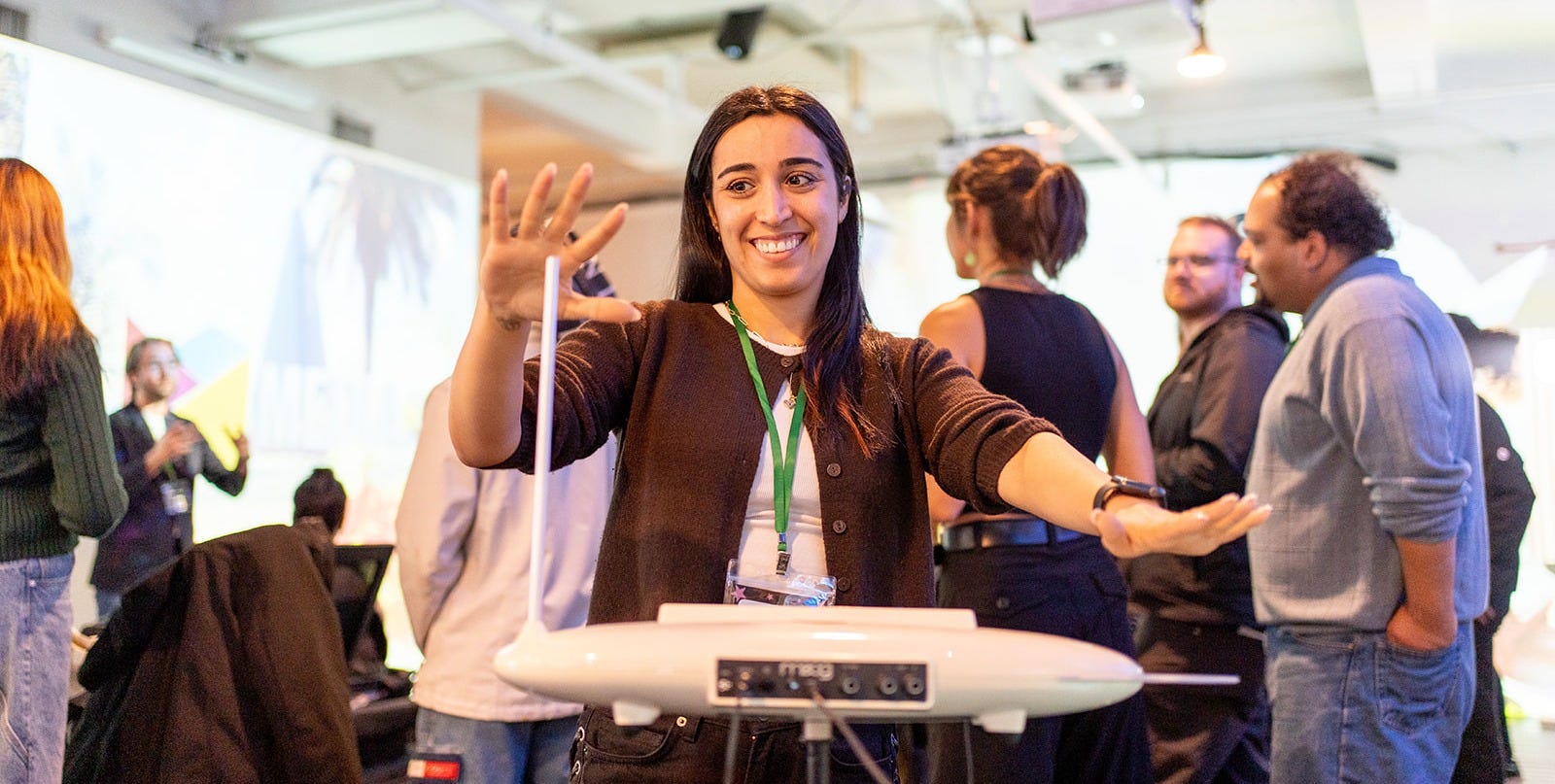
Using projection mapping, tech that’s been around for at least a decade and is now having a moment, Bravo can make anything in the real world look like, well, anything. The immersive storytelling shop showed off custom video games, a theremin, and an AI photo booth before hosting everyone for a happy hour to close out the long, eventful, and educational day. Questions about what’s the next big thing led to a discussion about holograms. Tile: true holograms don’t really exist and won’t for a while.
Hot tip: when working with experiential technologists, asking for the next big thing or emerging tech can be more trouble than it’s worth. Designing a next level experience is hard enough as it is. Using tried and true tools with a strong concept can be more effective and save your production the headache of trouble shooting untested gadgets during an activation.
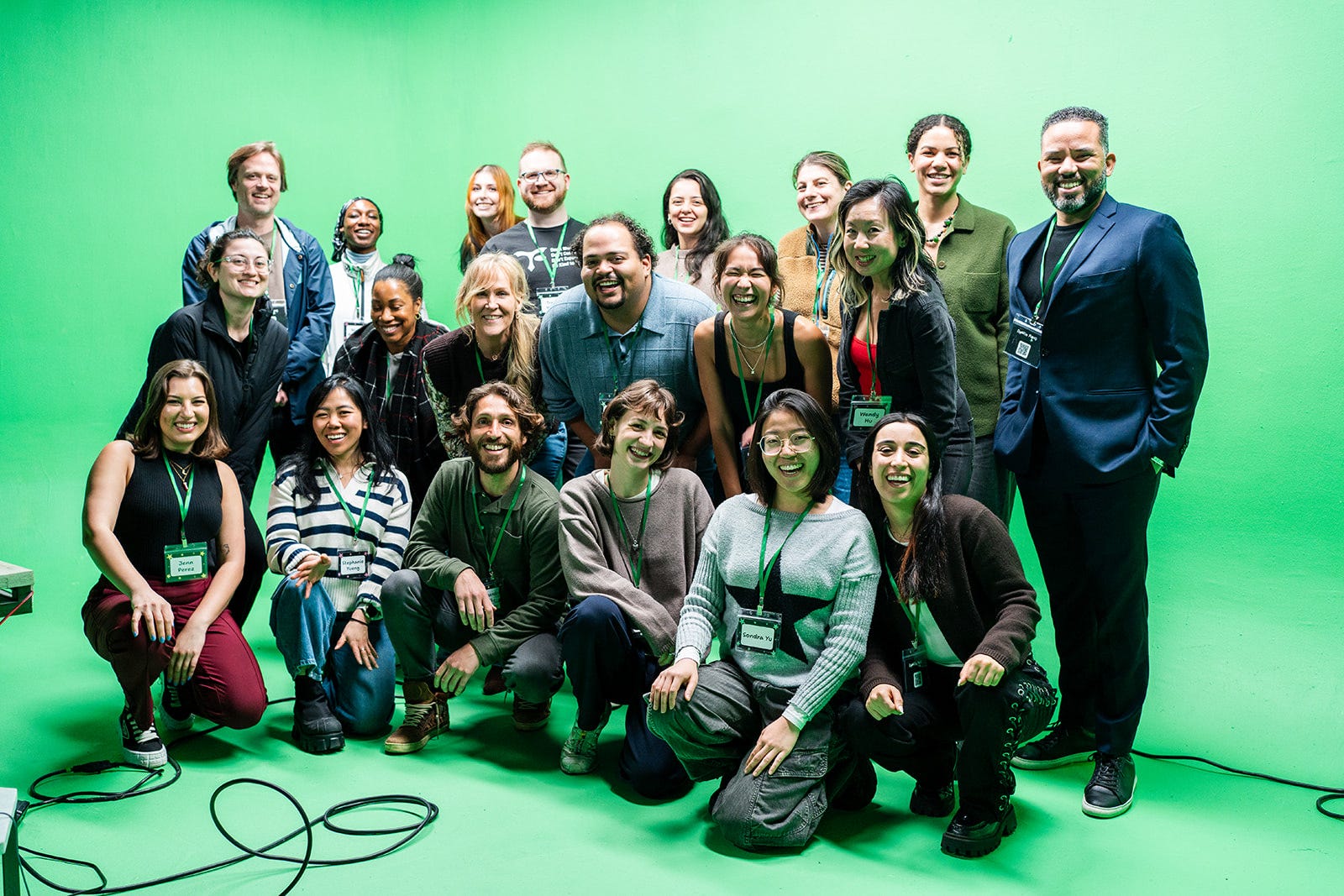
For the day’s results let’s turn to those that paid for the field trip.
Context
Julia Castro, MFA Candidate in Scenic Design & Technology at UMass Amherst, came from furthest afield (originally from Brazil) and was eager to see where and how her future designs might come to life. She said the program was much more than she expected.
“I work in a scene shop at my university and get to build every set that I design but it’s tiny. I didn’t have a holistic view of a large operation. Seeing the size of 11th St Workshop, their scale and how they do project management of multiple jobs was eye opening.”
Communications Best Practices
Courtney Liburd, recognized a professional vulnerability after changing careers from work in streaming video business development to an account director role at an experiential agency. Industry acronyms, and opaque processes aren’t covered during onboarding, and she reported a leap in understanding after having spent a day visiting vendors and mixing with other experiential pros.
“I want to show up for both my clients and my team, and having a strong understanding of what’s driving deadlines, priorities, and expectations helps me move seamlessly between both sides of that balance,” said Liburd.
Community
Attendee Fernando Coelho runs sales for LA Photo Party, a photo marketing agency. He gave the field trip an 8.5. “I learned about the ins and outs of fabrication, sign printing, and I’m already thinking about collaborating with these vendors for add-ons to what LA Photo Party offers.”
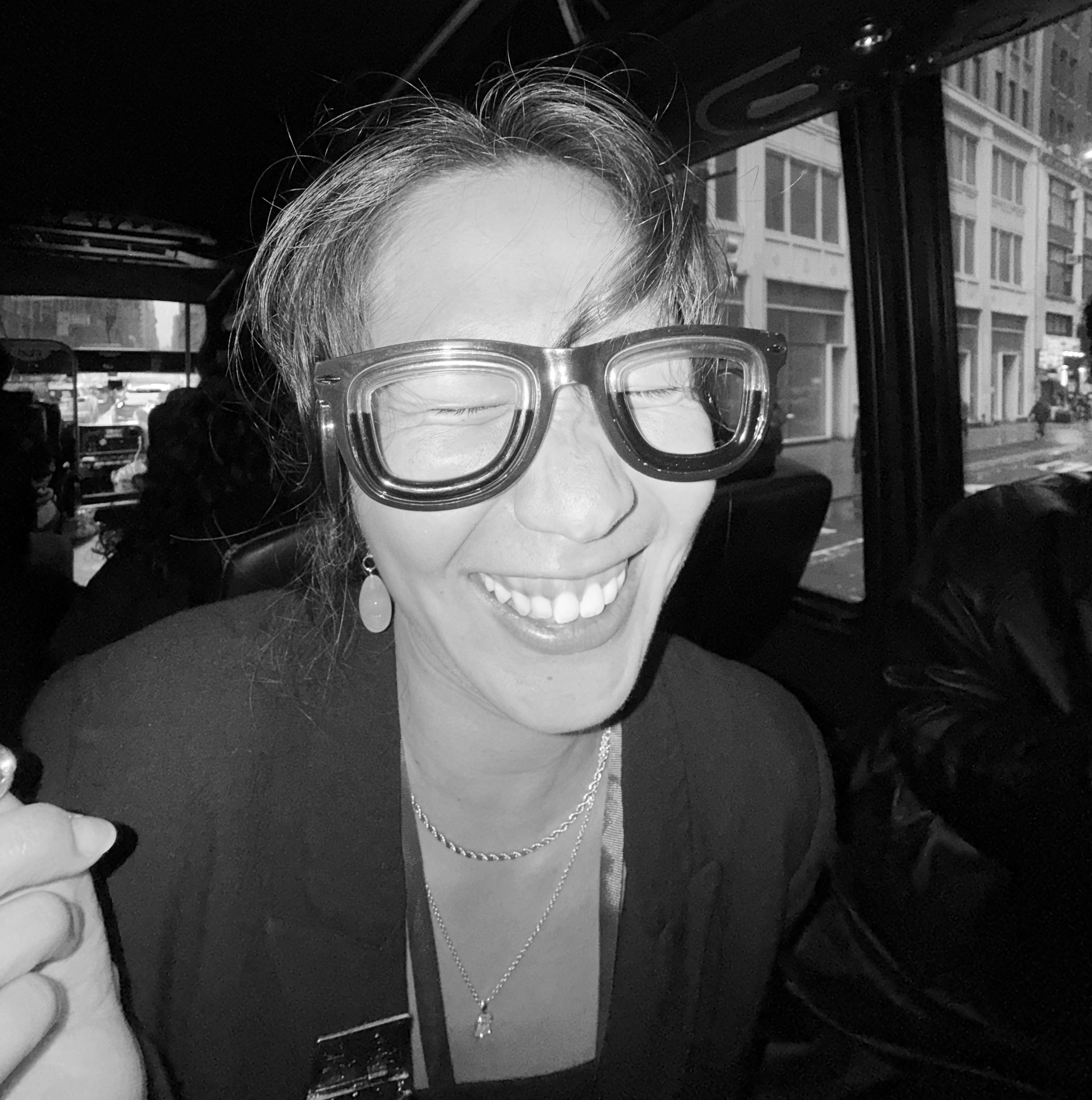
For a first time endeavor the program ran remarkably smoothly. We could credit Paige’s motion sickness neutralizing glasses for keeping her cool under pressure but that’s most likely her resting state anyway.
“We're all on the same team here and we all want to create the most amazing and intentional experience for our audience,” said Paige. “A little bit of context and education goes a long way, and I hope more folks are able to join the field trip so we can become stronger as an industry.”
As live activations continue to become a more standardized part of marketing budgets, look for more gateways into improving the industry and educating its doers. Something like the Experiential Marketing Field Trip doesn’t replace learning by doing – it accelerates it. By opening the doors between factions, it turns a fragmented ecosystem into something navigable, collaborative, and ultimately, more human.